US Credit Cards for Germans 2026: Which Cards Exist and Which One Fits You
Which US credit card is worth it in 2026 as a German? Comparison of the 5 most important cards (AMEX Platinum US, Gold US, Chase Sapphire Reserve, Sapphire Preferred, Venture X) with welcome bonuses, fees, and a profile-based recommendation. Why US points often transfer 1:1 to airlines instead of 5:4.
Status:
Quick answer: The most important US credit cards for German collectors in 2026 are AMEX Platinum US ($895/year, up to 175,000 MR), AMEX Gold US ($325, up to 100,000 MR), Chase Sapphire Reserve ($795, 100,000 UR), Sapphire Preferred ($95, 75,000 UR) and Capital One Venture X ($395, ~75,000 Miles). The main advantage over German cards: points transfer mostly 1:1 to airlines (instead of 5:4 or 3:2 in Germany) — and you get access to partners like Aeroplan, Hyatt and ANA that don’t exist in Germany at all. (Note: Chase UR → Hyatt is now only 1:1 on the Reserve; Preferred/Ink go to 4:3 as of Oct 2026.) The bonus per card is 2-3× higher than on comparable German cards.

In Germany, 250,000 MR (AMEX Platinum Business) is the highest welcome bonus you can get. In the US, that’s 2-3 cards at once from the standard lineup. Once you’ve seen that, you rightfully ask yourself: How do I get in on this as a German — and which card is the right one?
This article gives you the complete overview of the most important US credit cards in 2026: which cards exist, which welcome bonuses are currently running, what the cards cost, and above all — which one fits whom.
Note: This article explains which US cards exist and what they’re worth — not how you, as a German, actually get them. You’ll find the complete path (US address, US phone, US bank account, creditworthiness, application) in the MEILENKÖNIG US Card Handbooks.
Why US credit cards are so interesting for Germans
Three reasons argue for US cards — even if you live firmly in Germany:
1. Welcome bonuses 2-3× higher
| Card | Welcome bonus | Value (cents/point) |
|---|---|---|
| AMEX Platinum DE | 85,000 MR | ~€1,300-3,400 |
| AMEX Platinum US | 175,000 MR | ~$2,700-7,000 |
| AMEX Platinum Business DE | 250,000 MR | ~€3,000-8,000 |
| Chase Sapphire Preferred (US) | 75,000 UR | ~$1,000-2,500 |
| Chase Sapphire Reserve (US) | 100,000 UR | ~$1,300-3,300 |
Just one US card can match the highest German bonus — and you can combine several.
2. Transfer ratios mostly 1:1 instead of 5:4 or 3:2
This is the real reason US points are so valuable. In Germany, you lose value on transfer:
| AMEX Transfer | Germany | US |
|---|---|---|
| British Airways Avios | 5:4 (-20%) | 1:1 |
| Flying Blue (AF/KLM) | 5:4 (-20%) | 1:1 |
| Singapore KrisFlyer | 3:2 (-33%) | 1:1 |
| Cathay Pacific | 3:2 (-33%) | 5:4 |
| Delta SkyMiles | 3:2 (-33%) | 1:1 |
| Emirates | 2:1 (-50%!) | 5:4 |
| ANA Mileage Club | not available | 1:1 |
| Air Canada Aeroplan | not available | 1:1 |
100,000 MR become 80,000 BA Avios in Germany — but 100,000 Avios in the US. Across multiple bonus rounds, that’s a huge difference.
More on this: You’ll find the complete comparison of all transfer partners and 1:1 sweet spots in the article AMEX MR US vs Germany: Transfer Partner Comparison.
3. Partners that don’t exist in Germany
US collectors have access to programs that German cards never open up in the first place:
- Air Canada Aeroplan — Star Alliance program with a massive sweet spot (Frankfurt → Tokyo business for 75,000 Aeroplan points)
- World of Hyatt — Chase UR → Hyatt (Reserve 1:1, Preferred/Ink 4:3 as of Oct 2026); Cat 1 hotels from 5,000 points/night (not reachable in Germany)
- ANA Mileage Club — from 80,000 miles round-trip business to Japan (Star Alliance, seasonally tiered)
- Avianca LifeMiles — sweet spots for Lufthansa First Class from 87,000 miles one-way
- Virgin Atlantic Flying Club — from 50,000 miles for ANA business one-way (sweet spot, slightly devalued in 2024)
4. Travel benefits German cards don’t offer this way
Important clarification: Centurion Lounges are also included with the German AMEX Platinum (€720) — that’s not a US-exclusive benefit. The same goes for Priority Pass and the hotel status programs (Marriott Bonvoy Gold, Hilton Honors Gold) — both DE and US Platinum have those.
Real US Platinum advantages over DE Platinum:
- Delta Sky Club access (when traveling on a Delta ticket) — the German card doesn’t have this
- Walmart+ membership ($155/year value) — US-only, not relevant in Germany
- CLEAR Plus credit ($199/year) — US domestic security fast lane
- Saks Fifth Avenue credit ($100/year) — US-only
- Uber Cash credit ($200/year) — DE has the SIXT Ride credit as its counterpart (€200/year)
- Equinox credit ($300/year) — US fitness studio chain
- 0% foreign transaction fee — standard on US travel cards (German cards often have FX fees or poor exchange rates)
The real main advantage, however, isn’t in the lounges or status programs (those are similar in DE and US), but in:
- Welcome bonus (175k vs 85k MR — see the table above)
- Transfer ratios (1:1 instead of 5:4-3:2-2:1 in Germany)
- 8 additional airline partners (Aeroplan, ANA, Avianca, Aer Lingus, Virgin Atlantic, Hawaiian, AeroMexico, Choice Privileges Hotels — DE has none of them)
The 5 most important US credit cards of 2026
As of May 2026. Welcome bonuses and conditions change; check current terms before applying.
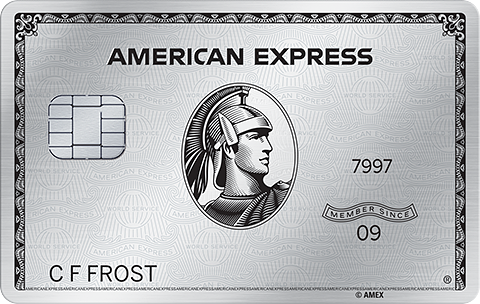
1. AMEX Platinum US — The premium all-rounder
| Property | Value |
|---|---|
| Annual fee | $895 |
| Welcome bonus | up to 175,000 MR (offer varies) / $12,000 in 6 months |
| MR earn rate | 5x flights & hotels (via AMEX Travel), 1x otherwise |
| Lounge access | Centurion Lounges + Priority Pass + Delta Sky Club (with Delta ticket) |
| Hotel status | Marriott Bonvoy Gold, Hilton Honors Gold |
| Travel credit | $200/year airline credit + $200 Uber Cash + $600 hotel + $400 Resy + $300 Digital Entertainment (selection, September 2025 refresh) |
For whom? Frequent flyers and hotel-heavy users. Anyone who regularly uses the travel credit + Uber + Saks + the Centurion Lounge access offsets a large part of the fee through real travel savings. With full credit usage, the net cost is often under $300/year.
2. AMEX Gold US — The bonus champion at a mid-tier price

| Property | Value |
|---|---|
| Annual fee | $325 |
| Welcome bonus (standard) | 60,000 MR / $6,000 in 6 months |
| Welcome bonus (targeted) | up to 100,000 MR / $8,000 in 6 months |
| MR earn rate | 4x restaurants worldwide, 4x supermarkets (US, up to $25k/year) |
| Travel credit | $120 Uber + $120 dining + $84 Dunkin |
For whom? Anyone who spends a lot at restaurants and grabs the welcome bonus at the same time. 4x on restaurants is the best earn rate of all US MR cards — quick to hit, lots to gain.
3. Chase Sapphire Reserve — The Hyatt king

| Property | Value |
|---|---|
| Annual fee | $795 (since the refresh in June 2025) |
| Welcome bonus | 100,000 UR / $6,000 in 3 months |
| UR earn rate | 8x via Chase Travel (refresh), 4x flights/hotels direct, 3x dining |
| Lounge access | Sapphire Lounges + Priority Pass Select |
| Travel credit | $300/year travel + $300 DoorDash + $250 The Edit Hotels + Apple TV+/Music + IHG Diamond |
| Point value | 1.5 cents/UR via Chase Travel (instead of 1 cent) |
For whom? Anyone who uses Hyatt hotels. The Reserve still transfers 1:1 to World of Hyatt — and since June 2026 that’s a real advantage: the Sapphire Preferred and Ink Business Preferred move to 4:3 (25% worse) as of Oct 2026, only the Reserve keeps the full 1:1 rate. Cat 1 hotels from 5,000 points/night — perhaps the best sweet spot in the points world. Plus: you book Lufthansa flights via United Airlines, which in turn can be fed 1:1 from Chase UR.
More on this: Chase Ultimate Rewards: The Most Valuable Points Program in the World — 2026 Guide
4. Chase Sapphire Preferred — The beginner favorite

| Property | Value |
|---|---|
| Annual fee | $95 |
| Welcome bonus | 75,000 UR (as of September 2026; the summer 100,000 LTO has ended) / $5,000 in 3 months |
| UR earn rate | 5x travel via Chase, 3x dining, 2x other travel |
| Point value | 1.25 cents/UR via Chase Travel |
For whom? The ideal entry into the Chase universe. 100,000 UR is enough for 20 Hyatt nights in Cat 1 hotels (via Reserve; with the Preferred ~25% less as of Oct 2026, since the Preferred’s Hyatt transfer switches to 4:3). The low annual fee makes it an insider tip for anyone who wants to “just try it out” first.
5. Capital One Venture X — The underrated generalist

| Property | Value |
|---|---|
| Annual fee | $395 |
| Welcome bonus | typically 75,000 Venture Miles / $4,000 in 3 months |
| Earn rate | 10x hotels via CapOne Travel, 5x flights, 2x otherwise |
| Travel credit | $300/year CapOne Travel |
| Anniversary bonus | 10,000 miles from year 2 |
| Lounge access | Priority Pass + CapOne Lounges for cardholder + 2 guests free |
For whom? Families (lounges for companions), travelers with unknown routes (“erase any travel purchase”), maximizers with only one premium card. $300 travel + $100 anniversary = effectively free from year 2.
Which card fits which profile?
Profile 1: The Lufthansa loyalist (Star Alliance)
Best setup: Chase Sapphire Preferred + Capital One Venture X
- UR transfers 1:1 to United MileagePlus and Air Canada Aeroplan — both Star Alliance, both book LH First/Business
- Aeroplan is the sweet-spot king for LH long-haul (75,000 points for FRA-NRT business; in Germany, M&M costs 70-105k miles + much higher taxes for this)
- Venture X as a backup for general spending + lounge access
Profile 2: The Oneworld fan (BA, Cathay, Qatar)
Best setup: AMEX Gold US + AMEX Platinum US
- AMEX MR US transfers 1:1 to British Airways Avios and Qatar Avios (Cathay Pacific Asia Miles currently 5:4)
- BA Avios are golden for short-haul (4,000 Avios for FRA-LON)
- Cathay First Class via Avios is a classic sweet spot
Profile 3: The hotel hacker (Hyatt lover)
Best setup: Chase Sapphire Reserve (or Preferred) + Chase Ink Business
- UR → Hyatt (Reserve 1:1, Preferred/Ink 4:3 as of Oct 2026)
- Hyatt Cat 1 hotels: 5,000 UR/night — Park Hyatt Cat 8: 45,000 UR/night (otherwise $1,000+ cash)
- Best points-to-hotel value worldwide
Profile 4: The SkyTeam fan (Air France/Delta)
Best setup: AMEX Gold US + AMEX Platinum US
- AMEX MR US transfers 1:1 to Flying Blue and Delta SkyMiles
- Flying Blue Promo Awards: regularly 50% off on business class
- Delta domestic sweet spots: from 5,000 miles one-way
Profile 5: The maximizer (all sweet spots, no compromises)
Best setup: AMEX Platinum US + Chase Sapphire Reserve + Capital One Venture X
- All three points ecosystems in parallel
- 175k + 100k + 75k = 350,000 points from welcome bonuses alone in the first year
- Value when redeemed for business class: $5,000-12,000
- Priority Pass from three sources — even if one drops out, two remain
Profile 6: The renter (Bilt)
Bonus setup: Bilt Mastercard (free)
- The only card in the world with which you can pay rent with points (in the US)
- Bilt points transfer 1:1 to American Airlines, Air Canada Aeroplan, Hyatt, Marriott, Air France/KLM, United, Cathay
- No annual fee, no mandatory spend
For German collectors, Bilt is more of a niche topic (rent payment in the US), but the transfer-partner spectrum is solid.
US vs DE — Concrete welcome-bonus comparison
What does “double the bonus” mean in actual flights? Here’s a sample calculation for one card in the first year:
| Scenario | DE: AMEX Gold (50,000 MR) | US: AMEX Gold (100,000 MR) |
|---|---|---|
| Transfer to BA Avios | 50,000 × 0.8 = 40,000 | 100,000 × 1.0 = 100,000 |
| Enough for | FRA-LHR business one-way (32,500) | FRA-LHR business round-trip + 35k in reserve |
| Transfer to Flying Blue | 50,000 × 0.8 = 40,000 | 100,000 × 1.0 = 100,000 |
| Enough for | nothing in business | FRA-JFK business one-way (promo: from 75,000) |
The real multiplier is 2.5×: twice the bonus × 25-33% better transfer ratio.
Hitting welcome bonuses correctly
All US cards have a minimum spend in the first 3-6 months. Examples:
| Card | Spend | Period | Per month |
|---|---|---|---|
| AMEX Platinum US (175k targeted) | $12,000 | 6 months | $2,000 |
| AMEX Gold US (100k targeted) | $8,000 | 6 months | $1,333 |
| Chase Sapphire Reserve | $6,000 | 3 months | $2,000 |
| Chase Sapphire Preferred | $5,000 | 3 months | $1,667 |
| Capital One Venture X | $4,000 | 3 months | $1,333 |
These spends are higher than on German cards — and in USD. Anyone who lives in Germany and pays in euros needs either high travel costs in USD, US-based spending (hotels, flights, rental cars), or carefully thought-out spend planning to hit the minimum spend on time.
Note: Which legal US spend paths are realistic for German cardholders and how you cleanly hit the minimum spend are explained in detail in the US Card Handbooks. Here on the blog, we deliberately describe only the cards themselves — not the spend paths.
How you even get US cards as a German (short version)
For German residents, there are three established ways to get US cards — all legal, all with different levels of effort:
Way 1: Global Transfer (GT) — Entry via a German AMEX
- Prerequisite: an active German AMEX (e.g. PAYBACK AMEX, Gold, Platinum)
- AMEX offers an internal transfer — you can get a US AMEX without an SSN
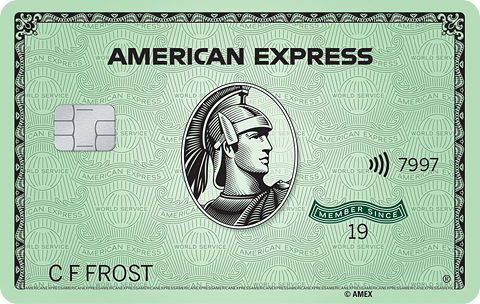
- Entry card: until July 2026 typically the AMEX Green US ($150/year). Since 23 July 2026 AMEX no longer accepts new Green applications; existing cardholders have held it as the “Classic Green” since 20 August 2026, and a successor product has been announced but is not yet official. Current GT entry options: Hilton Honors AMEX ($0) or AMEX Gold US ($325)
- Advantage: No US tax number hassle, fast entry
- Disadvantage: Welcome bonus often YMMV (“Your Mileage May Vary”); targeted offers usually not accessible; limited card lineup
Way 2: ITIN (Individual Taxpayer Identification Number)
- US tax number for non-US citizens
- With it, access to the complete AMEX lineup, plus first steps into the Chase and Citi ecosystems
- Application path: IRS Form W-7 with qualified documentation
- Effort: medium to high
Way 3: LLC (Limited Liability Company)
- US company (e.g. in Wyoming, Florida) with its own EIN number
- With it, business cards also become accessible (Chase Ink, AMEX Business Platinum US)
- The highest tier — but also involved (LLC formation, US bank account, taxes)
- Typical investment: $200-500 setup + annual fees
Important: These three ways are no secret knowledge, but exactly how you pull them off cleanly — from the US address to the US phone to the application and velocity management — is premium content. The MEILENKÖNIG US Card Handbooks are the only complete German-language guide for all three ways:
- US Sprint (€197) — The Global Transfer way, 11 chapters
- US Stack (€347) — The ITIN way incl. GT module, 22 chapters
- US Empire (€597) — The LLC way incl. GT + ITIN, 29 chapters
- US VIP Mentoring (€1,997) — All 3 handbooks + 6× 60 min 1:1 coaching
Frequently Asked Questions (FAQ)
Do I need a US Social Security Number (SSN) for US credit cards?
No, not necessarily. Via the Global Transfer way from your German AMEX, you can get your first US AMEX even without an SSN/ITIN. For the full card spectrum (all AMEX models, Chase, Capital One) you need an ITIN. For business cards, you also need a US LLC with an EIN.
Which US card has the highest welcome bonus in 2026?
The AMEX Platinum US with up to 175,000 MR (offer varies) at $12,000 spend in 6 months. AMEX itself only says “as high as 175,000” — there’s no fixed standard level. Higher (targeted) offers are often presented by email or via incognito search in the AMEX portal — the US Card Handbooks describe how to specifically work toward them.
Which US card has the best value for money?
For beginners: Chase Sapphire Preferred ($95/year, 75,000 UR welcome bonus, as of September 2026). The lowest annual fee among the big travel cards and it gets you straight into the Chase UR universe (Hyatt 4:3 as of Oct 2026 — only the Reserve keeps 1:1; United 1:1, Aeroplan 1:1). In the premium segment: Capital One Venture X ($395, $300 travel credit + 10k anniversary = effectively ~$0 from year 2).
Are US credit cards even worth it for German residents?
Yes — if you regularly fly in a premium cabin or use Hyatt hotels. A single US AMEX Platinum with a 175k MR welcome bonus is worth more than the German AMEX Platinum Business (250k MR) at a better transfer ratio. Anyone who flies business class to New York once has earned back the effort many times over.
What’s the difference between AMEX MR US and AMEX MR Germany?
Three things: (1) Welcome bonuses in the US are 2-3× higher; (2) transfer ratios in the US are mostly 1:1 instead of 5:4-3:2-2:1; (3) the partner list in the US includes Aeroplan, ANA, Avianca — which aren’t available in Germany. The points from US AMEX and DE AMEX are separate and not combinable.
Which US card is best for Lufthansa flights?
Chase Sapphire Preferred or Reserve plus transfer to Air Canada Aeroplan (Star Alliance) is the cleanest path. Aeroplan award charts have Lufthansa Frankfurt-Tokyo business at 75,000 points — compared with M&M (dynamic, often 70-105k + high taxes) often better. Alternatively: Avianca LifeMiles via AMEX or Capital One with a fixed award chart for Star Alliance premium.
How many US cards should I have at the same time?
Recommendation for beginners: 1-2 cards in parallel until you’ve hit the welcome bonus. Anyone with 3+ new Chase cards in 24 months runs into the 5/24 rule and gets automatically declined. More on this: Chase Ultimate Rewards Guide.
What tax obligations do I have with US cards?
In Germany: none on the welcome bonus itself (a non-monetary discount). In the US: ITIN holders may have to file Form 1040-NR if US income exists. Depending on the structure, the LLC can lead to CFC or add-back taxation (Hinzurechnungsbesteuerung) in Germany — clarify this on your own responsibility before you form an LLC. We do not provide tax or legal advice.
Are US credit cards combinable with German cards?
Yes, no problem. You can have your DE AMEX Gold and a US AMEX Gold in parallel — the points land in separate accounts. For maximum earn rates, the DE + US combo is even recommended, because they have different strengths (DE: better tax setup, US: better bonuses and transfer ratios).
Conclusion: Which US card is right for you?
There isn’t one single best US card. There’s only the best card for your profile:
- Beginner / Hyatt fan: Chase Sapphire Preferred ($95) — cheapest entry
- Premium / frequent flyer: AMEX Platinum US ($895) — best welcome bonus + 1:1 transfer ratios
- Restaurant lover: AMEX Gold US ($325) — 4x on restaurants worldwide
- Family traveler: Capital One Venture X ($395) — lounge for 2 guests free
- Renter (US): Bilt Mastercard (free) — pay rent with points
- Maximizer: All three ecosystems (AMEX + Chase + CapOne) in parallel
The first step is always the most important: one card, one welcome bonus, one real booking. Only then does the next step make sense.
Note: Transfer ratios are snapshots and change constantly (most recently Chase→Hyatt in June 2026). Always check the current rate directly with the program before you transfer points. As of this article: June 2026.
Further articles:
- AMEX MR US vs Germany: Transfer Partner Comparison — All 1:1 ratios and sweet spots in detail
- Chase Ultimate Rewards Guide 2026 — Hyatt, 5/24 rule, trifecta strategy
- Redeeming AMEX Points: Up to 4 Cents per Point — Transfer mechanics (DE)
- Which AMEX Card Fits Me? — Decision guide for German cards as a GT anchor
- Lounge Guide 2026: Priority Pass & Centurion — Lounge access with US cards
You don’t just want to know which cards exist, but as a German actually hold a US card in your hand? The MEILENKÖNIG US Card Handbooks are the only complete German-language guide for all three ways (Global Transfer, ITIN, LLC) — from the first application to the full card stack. Three tiers (Sprint €197, Stack €347, Empire €597) plus VIP mentoring (€1,997).
Your path to US credit cards — step by step
Welcome bonuses up to 175,000 MR, 1:1 transfer ratios, Chase & Capital One: the US handbooks show you the complete roadmap — from the US address to your first card. Without US residency, as a German.
To the US card handbooks
MEILENKÖNIG
Expert for miles, points, and credit card strategies. Helps travelers fly business & first class for a fraction of the price.